Metro Authority Triples Crush Zone Budget After Diagonal Standing Fails
AI illustration
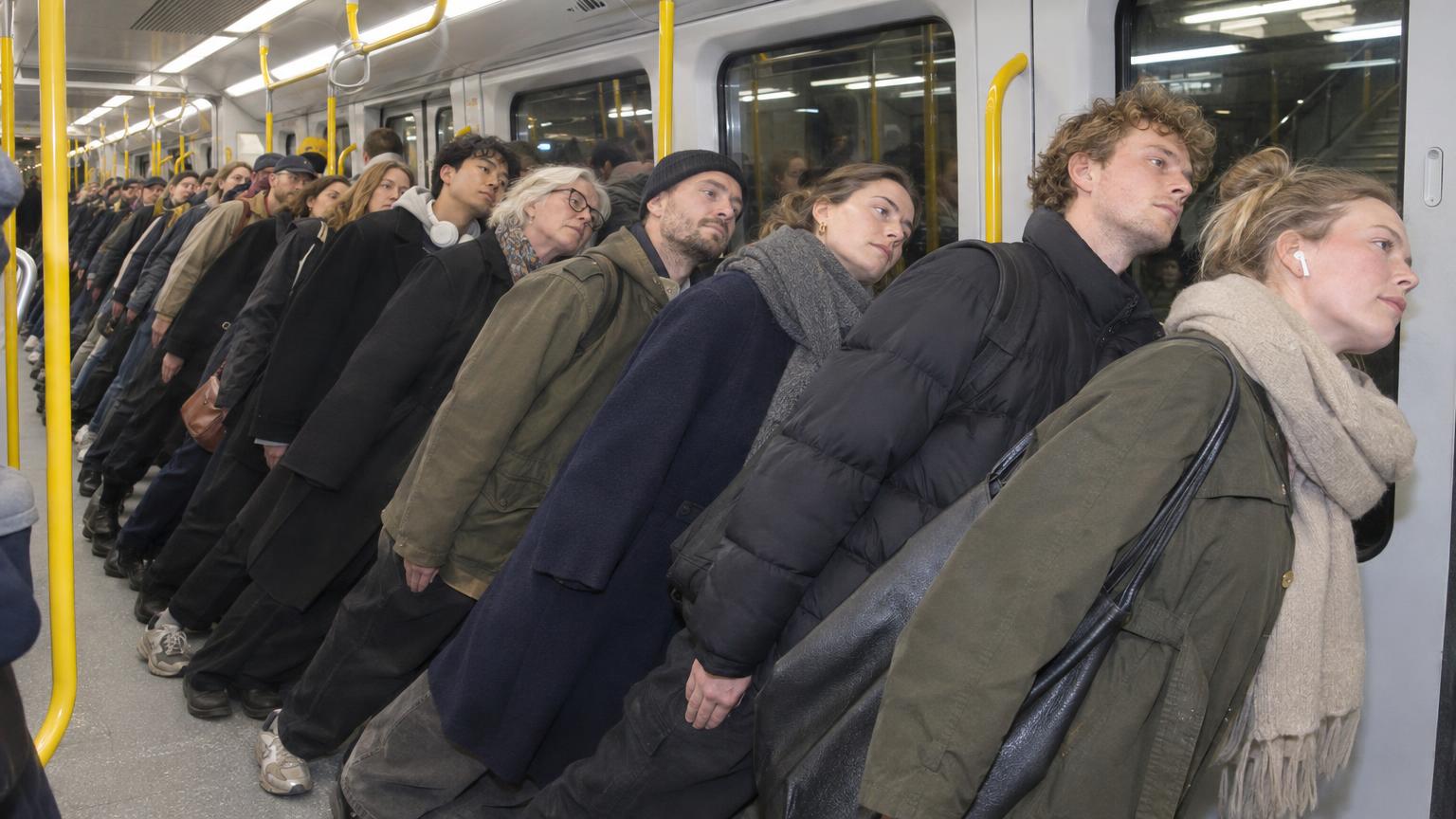
Copenhagen — The authority confirmed the budget rose 340 percent after riders asked to stand diagonally. The authority said the rise reflects growing passenger numbers who adapted to standing at angles.
The money will fund what the Copenhagen Metro calls crush zones: the 40 centimetres between a closed door and the nearest backpack, now staffed, measured and maintained like any other piece of infrastructure.
Metro Authority spokesperson Lars Kjeldsen described diagonal standing as the network's most efficient upgrade in a decade. "Riders found the gaps on their own," he said. "We simply funded the gaps. Nobody asked for more trains. They asked to stand at forty-five degrees, and we listened."
The diagonal did not hold. By its second week, the 8:12 from Nørreport had filled every angle, and riders displaced from the first carriage reported the next carriage was also full, at the same tilt.
The authority responded with a staged adaptation plan, distributed to platform staff under the heading Rider Progress.
Process
Metro Authority Rider Adaptation Framework
01
🧍
Stage One: Standing
Riders stand upright, as originally designed.
02
↗️
Stage Two: Diagonal
Riders tilt to 45 degrees, freeing roughly one shoulder of crush zone per person.
03
🧩
Stage Three: Interlocking
Riders adapt to sharing a centre of gravity with the passenger opposite. Budget review to follow.
04
🚉
Stage Four: Platform
Riders who cannot adapt wait on the platform until they can.
Stage three has reached the Østerbro platform, where commuters now board in pairs, already interlocked, to save time inside.
"I've been holding the same stranger's elbow since Tuesday because letting go means missing two trains," said Mette Holm, a nurse who commutes to Rigshospitalet. "They keep calling it a budget for us. It's a budget for not running another train."
Kjeldsen confirmed the authority's earlier position that diagonal standing will remain until riders adapt, and that the 340 percent rise covers adaptation, not capacity. Asked when riders would be considered fully adapted, he said the authority would know when no one complained, because no one would be able to turn their head.
Stage five, horizontal storage, is scheduled for consultation in 2031. ■
But seriously…
The joke above is built on a real story. Here's the straight version.

 AI illustration