Metro Authority Confirms Diagonal Standing Will Remain Until Riders Adapt
AI illustration
Copenhagen — The metro authority said diagonal standing during peak hours would remain in place until riders adapt to the new geometry. A spokesperson said the carriage layout had not been changed, only the expectations.
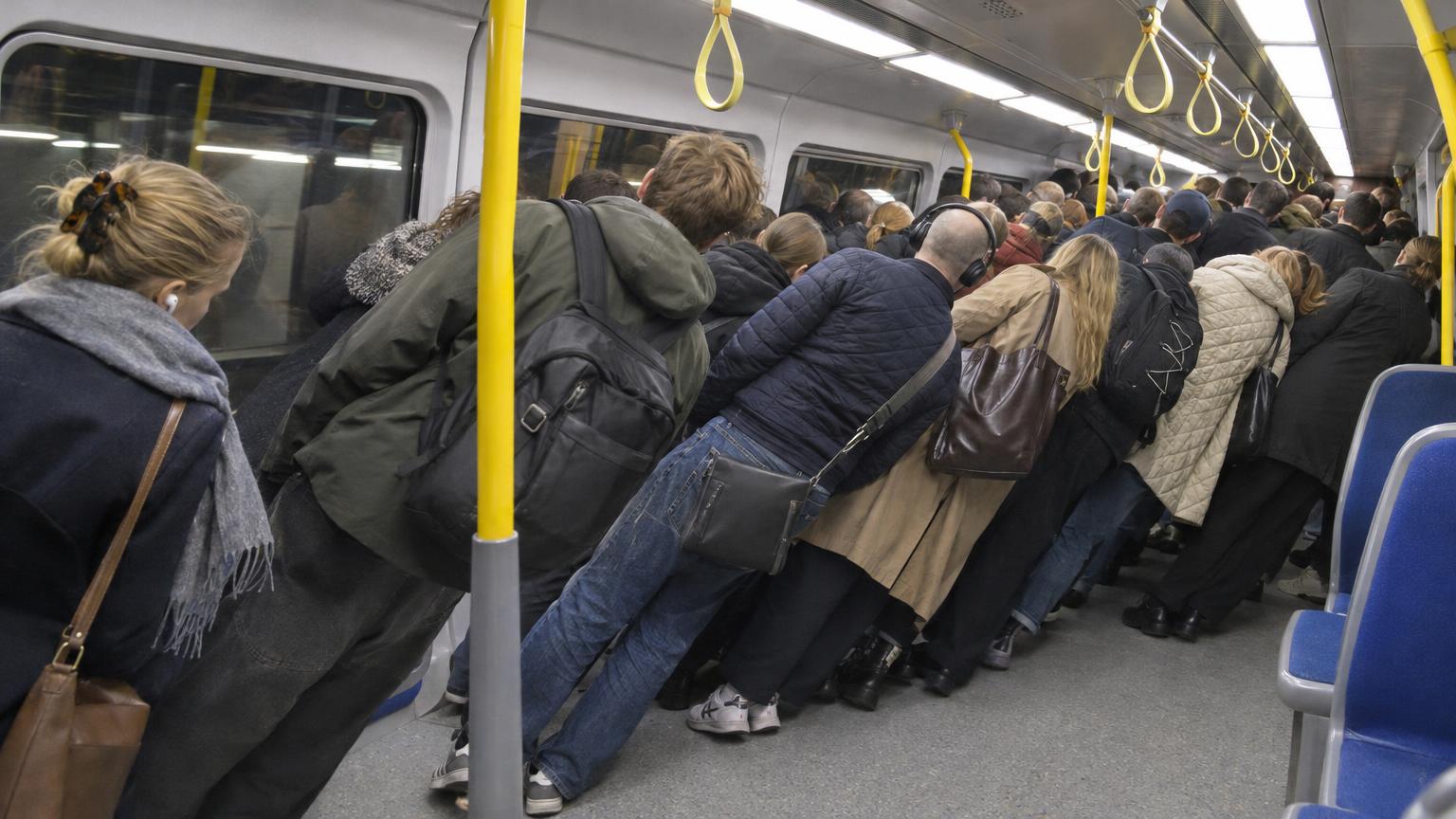
The authority's Director of Carriage Geometry, Ebbe Marstrand-Holk, told reporters at the Nørreport platform on Wednesday that the diagonal stance adopted by riders during the 07:30 and 16:00 peaks is "entirely intuitive once the body accepts the new angle." Marstrand-Holk said the layout of the carriages had not changed since the last timetable revision. What had changed, he said, was the expectation placed upon the rider. Peak-hour crowding on the M1 and M2 lines is now managed by passengers occupying the space between the doors, the poles and the adjacent passenger's left shoulder at a 40-degree inclination. Asked whether riders had been consulted, Marstrand-Holk said consultation had taken place "in the sense that we observed them." A commuter from Frederiksberg who declined to give a surname said she had spent eleven minutes that morning trying to locate her own elbow.
A two-page instruction sheet titled Recommended Lean for Peak Occupancy has been posted at every entrance to the metro network. It advises riders to "maintain a forward-facing diagonal while retaining grip on the overhead rail, and to avoid perpendicular standing, which the Authority considers a demonstration of resistance." The sheet does not mention extra trains. It mentions the word "adapt" four times. The Authority confirmed the sheet was reviewed by its Head of Rider Expectations, Sanne Vindelev, who approved the diagonal as "a dignified tilt." Her office said she was unavailable to clarify whether the tilt should be maintained during the disembarking announcement, when most riders are not moving at all.
The Copenhagen municipal finance office has reclassified rider adaptation as a line item under infrastructure, according to a revised capital plan filed with the city council. Under the new entry, the cost of crowding is recorded as "passenger body reconfiguration, peak corridors," with no associated procurement and a projected return measured in shoulder width. The plan forecasts that the next budget cycle will include a measured angle, and that riders who fail to reach it will be counted toward the Authority's occupancy target. Finance Director Kasper Holmqvist-Aadal said the reclassification "reflects the realities of the network." He declined to say whether the trains had also been reclassified.
The Authority said the diagonal stance will continue through the autumn peak schedule and will be reviewed when riders have finished adapting. Asked how the review would determine adaptation, Marstrand-Holk said measurements would be taken at the Nørreport junction, where a laminated protractor has been bolted to the wall beside the escalator. He said the protractor was installed as a courtesy. Riders who have been standing at 40 degrees since September were not immediately available for comment, having been unable to turn their heads. ■
But seriously…
The joke above is built on a real story. Here's the straight version.

 AI illustration