Google Data Center Relabeled 'Large Energy Project' to Preserve Mystery
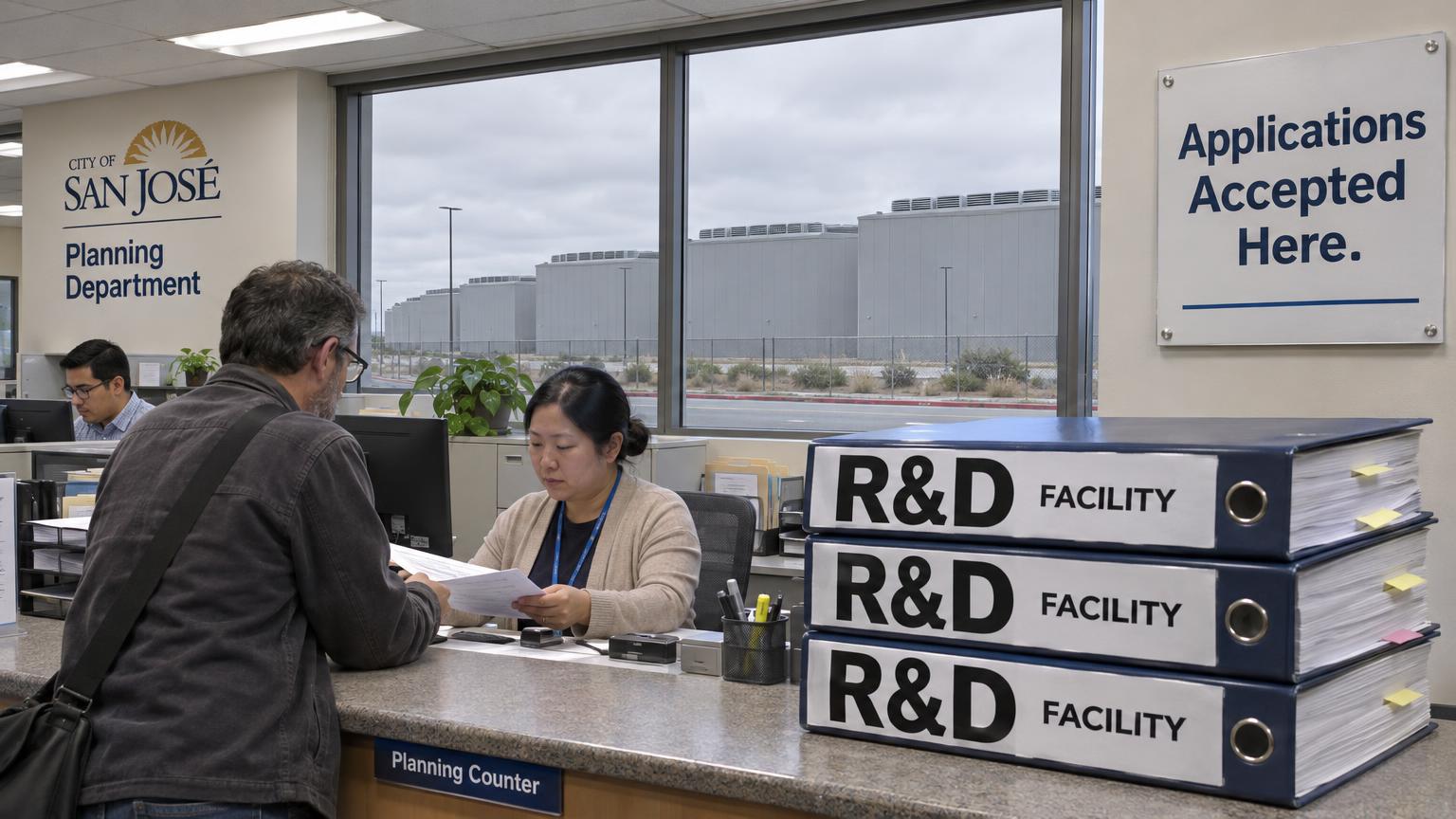 AI illustration
Silicon Valley — San Jose classified Google's 483,000-square-foot facility as an R&D complex despite its data center characteristics. A city planner said the label allowed the project to bypass new regulations.
The application arrived at the city's planning counter in the spring under two addresses on Disk Drive in Alviso, 5079 and 5087, and was processed the way all applications are processed in San Jose: with a checklist. The checklist asked what the building would be used for. The planning staff, after what a department spokesperson described as "a thoughtful conversation," wrote down that it would be a research and development facility. The city's own file lists the project at up to three buildings totaling roughly 483,000 square feet. It is classified as a large energy use project. Nobody in the file calls it a data center, a term that appears only in the parts of the record that describe the racks, the cooling loads and the electricity they will draw. Under the R&D designation, the project is not subject to the new data center standards the council is scheduled to vote on December 8. A staff member, speaking on condition of a first name only, said the label was "accurate in every way that matters to the review." The building, according to the drawings, has not changed.
Environmental review for the site leans on documents prepared for earlier phases of the same industrial park, some of them more than a decade old, which describe a warehouse district that no longer exists on paper. A city planner, reached by phone and asked to explain the distinction, said it was simple. "A data center is a building with a lot of computers in it. An R&D facility is a building where people research things about computers. The second one is more pleasant to walk past." Asked whether the square footage, the cooling capacity or the three buildings changed under the second description, the planner said the file was "very clean on that point" and that the department would not characterize the project further until the item came before the council. The California Public Utilities Commission is separately weighing about $150 million in transmission upgrades needed to serve the site, the cost of which would be spread across ratepayers over 15 years.
Neighbors in the nearby Alviso and Milpitas-facing blocks said they learned about the project from the signs on the fence rather than from any notice, and that the signs described it as "future innovation space." One resident who has lived near the industrial edge of the district for twenty years said she had asked the planning counter whether the new buildings would use more power than the apartments down the road. She was told it was a research facility. "Okay," she said. "I just wanted to know if the lights would go on at night." The lights, according to the site plan, will be on at all hours. The R&D label does not change the wattage.
The standards up for a vote on December 8 would require data center projects to report energy and water use and to meet new siting conditions. The city has said the proposal is about "clarity." The project at Disk Drive, which the city has classified as an R&D facility, would fall outside them. Its applicants have not said whether they intend to build anything called a data center. They have said they will build a research facility, and the city has agreed, and the Public Utilities Commission will decide in the meantime who pays for the wires. The vote on the standards is scheduled for December. The project is not a data center. ■
But seriously…
The joke above is built on a real story. Here's the straight version.
Why does San Jose classify a data center as an R&D facility, and who pays for the power it needs?Get the straight answer →