
Insurers Say Altadena Policy Covered House, Not Ground
 AI illustration
Los Angeles — With LA County opening soil testing for Eaton fire lots that insurance did not cover, carriers released guidance placing all coverage at least one inch above grade. Foundations are being reviewed case by case.
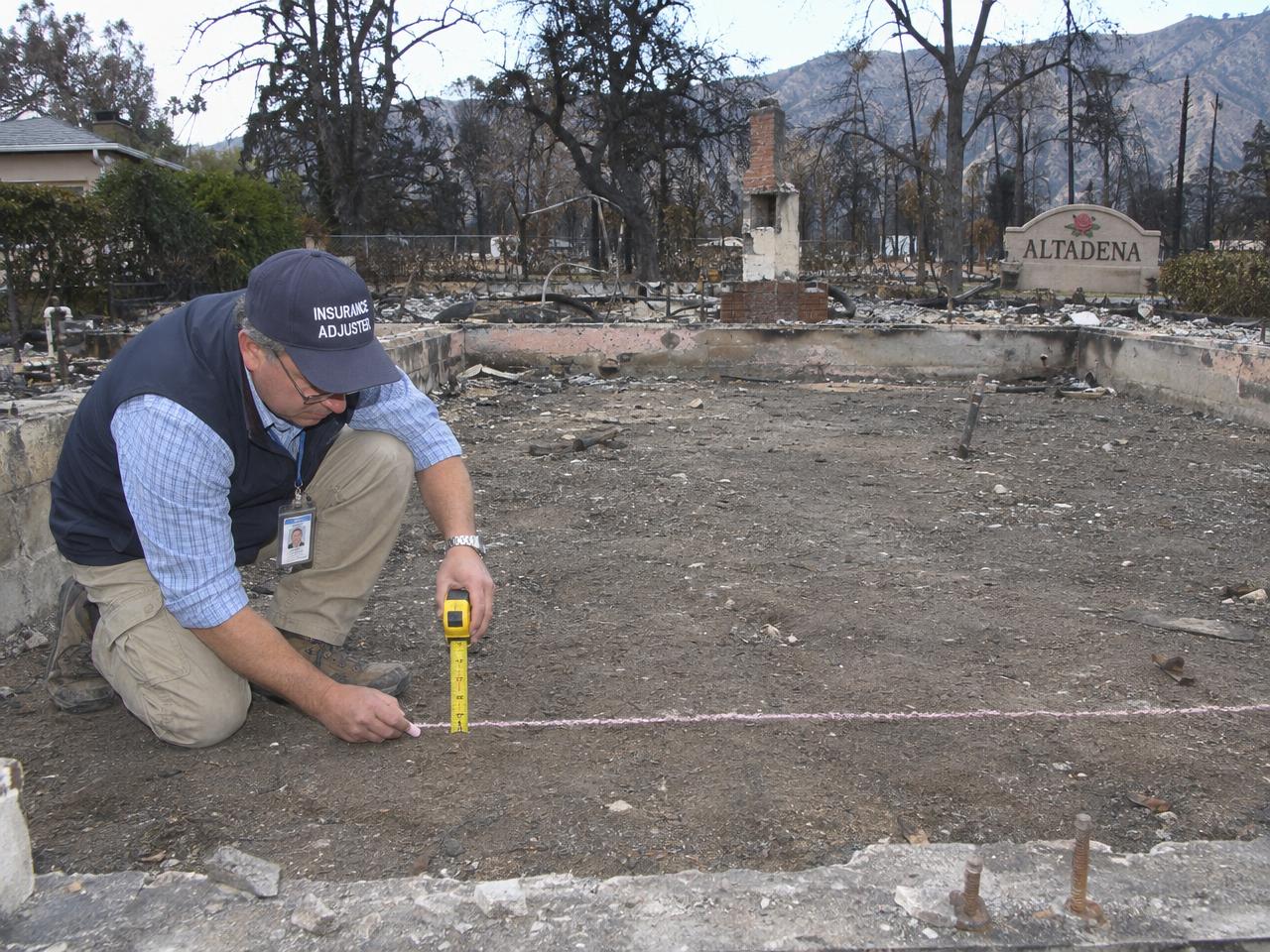
In a bulletin sent to agents Tuesday, the Western Homeowners Mutual Association said its policies cover the structure of a home "beginning one inch above finished grade," a definition it described as longstanding and consistent with industry practice. The clarification followed a wave of claims from Eaton fire properties in which homeowners asked whether the soil beneath their houses had been included in their coverage. It was not, according to the bulletin, which noted that "ground, dirt, fill and the matter contained therein are not structure." Agents were advised to explain the distinction to policyholders in plain language. Several said they had already done so, in person, while standing in the ash.
Foundations, which sit at or below grade, are being reviewed case by case, a process the association's Director of Coverage Elevation, Dale Ferrante, described as "a careful examination of where the house ends and the planet begins." Ferrante said the question of whether a poured slab counts as structure or as ground remains open. "We are not in the business of guessing where a house stops," he said at a briefing Thursday. "We measure it, and then we measure the next inch." Policyholders whose foundations were scraped to bedrock by the fire were asked to submit photographs taken from a vertical distance of one inch above the lowest remaining concrete.
The association's supplemental guidance, reviewed by this newspaper, classifies ash, soot and fine particulate deposited on lots as "precipitation," a category it said falls under the policy's act-of-nature exclusion. The guidance does not say which act of nature. A spokesperson for the association said the classification was "technically defensible" and that the weather in question had been "extremely dramatic." Asked whether the ash that settled inside the county's testing boundary qualified as weather or as contamination, the spokesperson declined to comment, then offered a copy of the exclusion clause, which is eleven pages long and contains the word "ground" nine times, each time in the phrase "not covered."
Under a new optional endorsement, policyholders may purchase Ground Protection coverage for an additional annual premium, which the association said would extend protection to the top foot of soil on the insured lot. The endorsement applies only to soil above one inch below the structure, which the association said was "a very generous band." The endorsement is not available to properties already holding a pending claim, a requirement the association described as "simply good timing." Several residents said the premium quoted to them was more than the cost of replacing the lot's topsoil by truckload. The association confirmed that this comparison was made by a homeowner and "not something we would ever do."
Insurers have paid roughly half of the cost to rebuild for many Eaton fire households, a figure the association now describes as "full coverage of the structure, measured from the appropriate elevation." Under that formula, a house's payout is divided by its height above grade, with the ground floor counted as the first inch and everything above it counted as the remainder. The formula produces a settlement that the association calls complete and that many policyholders have described, in the words of one Altadena resident, as "a check for the second floor." The county's soil program, which covers testing and possible removal, is currently accepting applications at the Altadena office, where the fence around the lot is still up.
The county's soil testing and possible removal program is funded by public money, and it covers the ground the policies did not. Applications are open, and testing is scheduled lot by lot. The association said it respects the county's work and noted that, under its definitions, the soil program is not a coverage question but a municipal one, which the association does not insure. ■
But seriously…
The joke above is built on a real story. Here's the straight version.
Does my homeowners policy cover the soil under my house after the Eaton fire?Get the straight answer →