
Article📍GENEVA
UN Launches Peace Week Requiring All Diplomats to Carry Their Own Chairs
The Palais des Nations confirmed Monday that the seating arrangement for the upcoming session has been converted into a 'self-directed attendance model,' with delegates asked to bring their own folding chairs. A spokesperson said the change was adopted to 'demonstrate the equal weight of every voice in the room.'
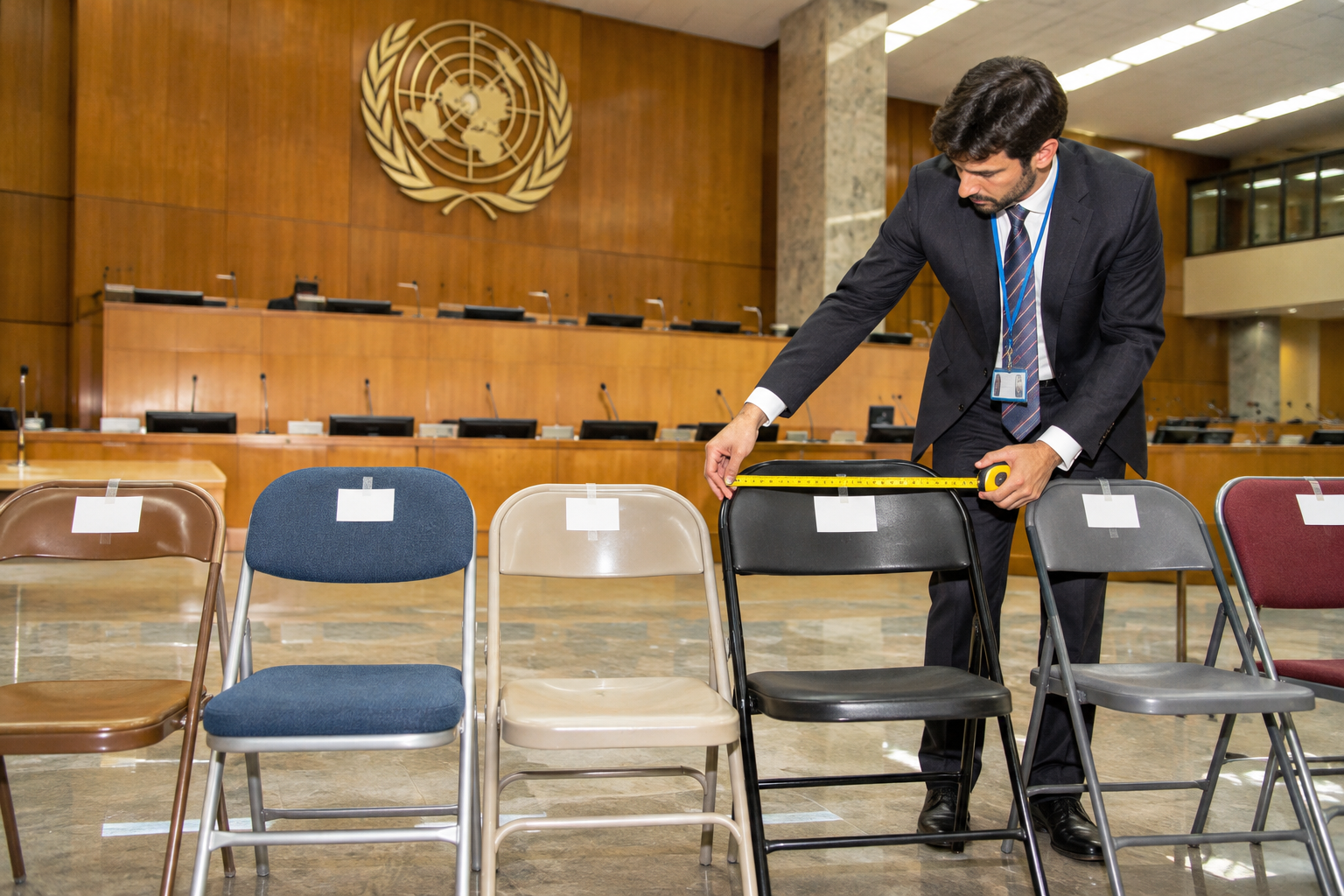
United Nations Office at Geneva
Every Voice, Every Chair
- :
- All Delegations and Permanent Observers
- :
- Protocol Officer for Seating Equity
- :
- March 9, 2026
- :
- Transition to Self-Directed Seating Arrangements
Following the review of the seating model, the Office has determined that assigned seating reflected historical precedence rather than current participation. Effective immediately, assigned seating is abolished.
Seating Terminology:
- •"Assigned seat" is replaced by "claimed position."
- •"Reserved" is replaced by "held in good faith."
- •"Chair" is replaced by "personal seating unit," which delegates are responsible for supplying.
Delegates are reminded that the Palais cannot guarantee availability of additional chairs. Loans from the Geneva rental company remain available on a first-come basis until stock is exhausted.
Expected Outcomes:
- •Equitable distribution of space across all delegations.
- •Reduction in seating-related grievances to zero.
- •Seating capacity of the Assembly Hall reduced by approximately forty percent.
With commitment to equality,
Protocol Officer for Seating Equity
Frequently Asked
Frequently Asked Questions About the Seating Policy
The Palais does not provide personal seating units. Loans of folding chairs from the Geneva rental company are available on a first-come basis until stock is exhausted.
The delegate is welcome to stand. Standing positions are not assigned and are not guaranteed.
The Office does not rank personal seating units. Permanent observers have historically been observed to occupy the positions closest to the exits, which the Office considers a coincidence.
The Assembly Hall now seats approximately forty percent fewer people than before the policy. The Office considers this a reflection of the new participation model.