Poisonal
Article📍WORLD
Pass it along a thing worth keeping

Small Orchard Confirms Nine Freezers of Pawpaw Puree Have Achieved Permanent Storage Status

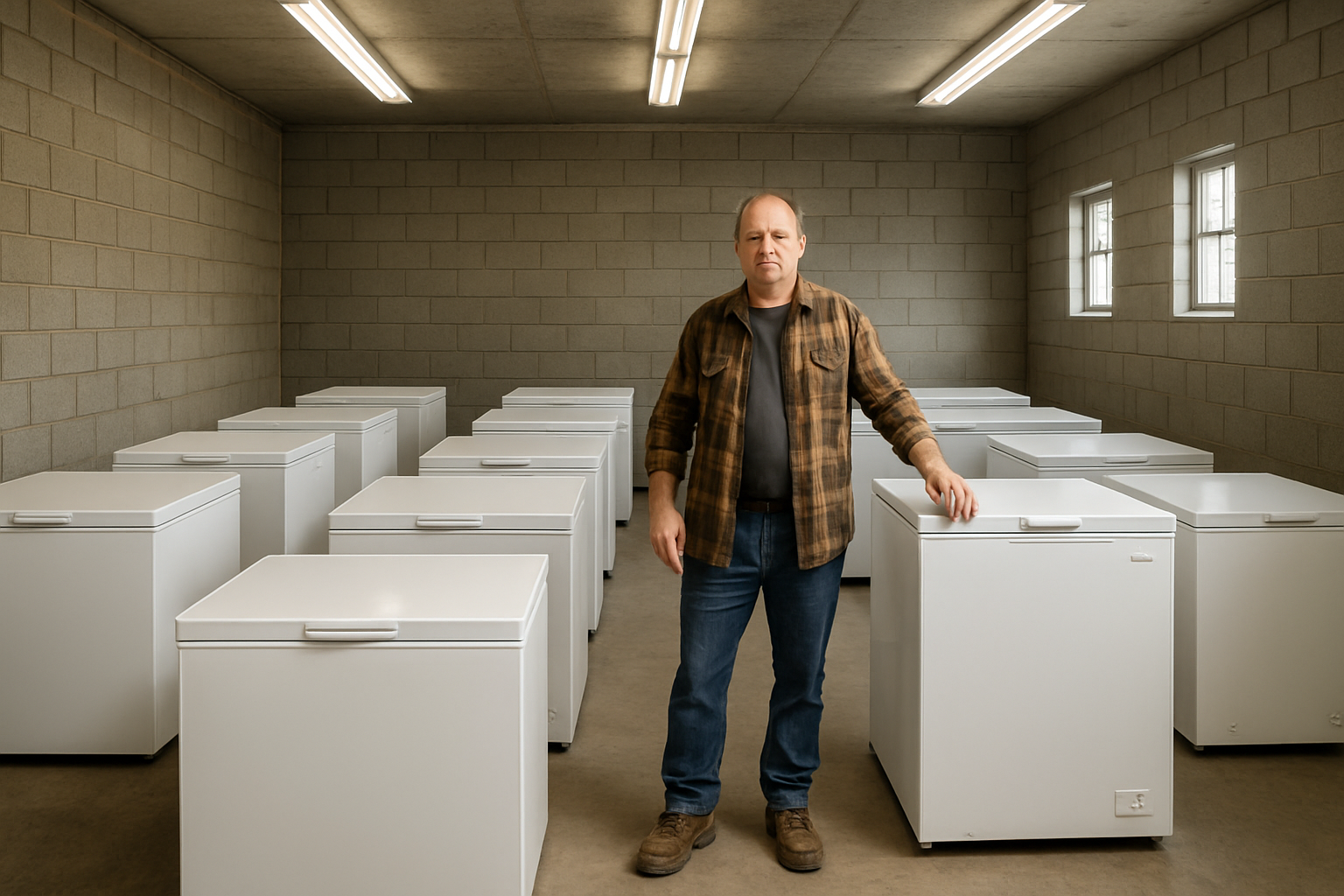
A family-operated pawpaw farm in the mid-Atlantic region announced this week that nine chest freezers remain at full capacity with tropical-tasting pulped fruit harvested during what operators now refer to as the previous administration, a period spanning three growing seasons. The farm's proprietors, who initially marketed the puree as a time-sensitive artisanal product, have since pivoted to describing the stockpile as a long-term cold-chain investment. "We're not discouraged," said Martin Delvecchio, the farm's operations director, during a Tuesday visit to the freezer facility located behind the main barn. "Demand will come. It's a matter of patience and strategic food preservation." The freezers, which cost approximately $340 per unit to operate annually, have accumulated roughly $30,600 in cumulative electricity expenses since the harvest cycle began.
18 days ago • 8 min read
Text Size
⚡
Speed Reading
Press Tab
🔇
Read Aloud
Press A

The nine freezers have not moved in 18 months. Delvecchio has begun measuring their utility in strategic reserve terms, a phrase that entered farm vocabulary sometime after the third unpurchased pallet arrived at a regional food distributor. The puree—bright yellow, dense, tasting faintly of mango—is no longer a product with a sell-by date. It is now, by his accounting, a long-term cold-chain investment. "People don't understand pawpaw," he said, standing in the sealed room where the freezers hummed in rows. "The market is sleeping. We're not going anywhere." The electricity bill disagreed.

Reading...
SPEED READING
Complete!
1 / 0
500 WPM
Frequently Asked

Delvecchio Orchard—Pawpaw Stockpile: Answers to Questions Posed by Regional Grocers

Indefinitely, in theory. Freezer burn can affect texture after 18-24 months, but Delvecchio notes the puree was sealed in commercial-grade vacuum bags by a third party, so degradation is theoretical rather than immediate.
Distributors require—and this is important—proof of market demand before accepting transfer. The current arrangement keeps operational costs on-site and avoids what Delvecchio calls "premature supply-chain consolidation."
Delvecchio has explored both. Farmers' markets require recurring presence and product turnover. Direct-to-consumer requires cold-chain logistics for shipping. Both require labor Delvecchio's three-person operation cannot allocate while maintaining the main orchard. It is simpler to wait.
Delvecchio declined to specify. He noted that the puree is "stable" and that "stability is a form of success."

The Pawpaw Initiative: A Chronology

September 2021
Harvest begins
Delvecchio plants 140 pawpaw trees on 2.3 acres of cleared orchard land, betting that the tropical fruit's growing popularity in specialty food markets will support a direct value-added product. Initial projections: 800 pounds of puree per season.
October 2021–October 2023
Three-season production cycle
The farm harvests and processes approximately 2,400 pounds of fruit across the cycle. Marketing emphasizes artisanal sourcing and limited availability. Delvecchio pitches to seven regional food distributors and four specialty grocers.
November 2023
First freezer acquisition
One grocer places a trial order: 50 pounds. It sells in four days. Delvecchio immediately purchases nine commercial chest freezers on a payment plan, assuming demand will scale.
December 2023–March 2024
Inventory accumulates
The initial grocer does not reorder. Five other distributors cite "shelf-space constraints" and "consumer unfamiliarity." No other orders arrive. Delvecchio begins referring to the harvest cycle as the previous administration.
April 2024–present
Strategic reserve maintenance
Nine freezers remain at full capacity. Monthly operating cost: approximately $2,550. Delvecchio shifts language from "artisanal product" to long-term investment. The waiting begins.
Interior of barn with nine white commercial freezers in rows and a man in work clothes standing between them

Delvecchio among the nine freezers, April 2024.

Operating cost
$30,600
in cumulative electricity expenses since harvest cycle began
Nine freezers operating at approximately $340 per unit annually, running continuously for 18 months. The cost exceeds the wholesale value of the fruit inside them by a factor of approximately 2.1.
Delvecchio Orchard utility records, September 2023–April 2025
Text Size
⚡
Speed Reading
Press Tab
🔇
Read Aloud
Press A

The math is available to anyone who asks. Delvecchio does not hide it. He has recalculated it, probably more than once, in the office beside the barn—multiplying 340 by nine, multiplying that by the months elapsed. He knows the answer. He has chosen to reframe the question: not "How much money has this cost?" but "How much value does patience hold?" This is the farm operator's remaining move. Call it strategic. Call it inevitable. The freezers continue to run.

Reading...
SPEED READING
Complete!
1 / 0
500 WPM

More from World