Poisonal
Pass it along a thing worth keeping

Johns Hopkins Publishes Comprehensive Guide on Getting Around Baltimore Without Using Baltimore Transit

Johns Hopkins University's transportation guide for new students recommends personal vehicles, rideshare, and bicycle routes as primary options before listing public transit, citing unpredictable schedules and limited coverage. The guide notes that Baltimore's transit system "serves important populations" but suggests alternatives for those with flexibility.
19 days ago • 8 min read

The Ranking

Under a heading reading 'Your Options,' the guide ranks five modes of travel for incoming students at the Homewood campus, in descending order of recommendation. Personal vehicles come first, followed by rideshare, bicycles and walking. Public transit is listed fifth of five, beneath a note that reads serves important populations. The guide does not say which populations are important. It does not say which ones the university expects to arrive by bus. Students who ask the transportation office about the ranking are directed to the campus shuttle network, which the university operates itself between Homewood, the medical campus and the hospital. The university's own guide places the city's bus and rail system below a rideshare app.

List · Bulleted

Recommended Order, as Printed

5 items
  • Personal vehicle, with a parking permit required through Commuter Services
  • Rideshare, using the university's designated pickup zones
  • Bicycle, using the Baltimore bike lane network where marked
  • Walking, for trips under one mile
  • Public transit, which serves important populations
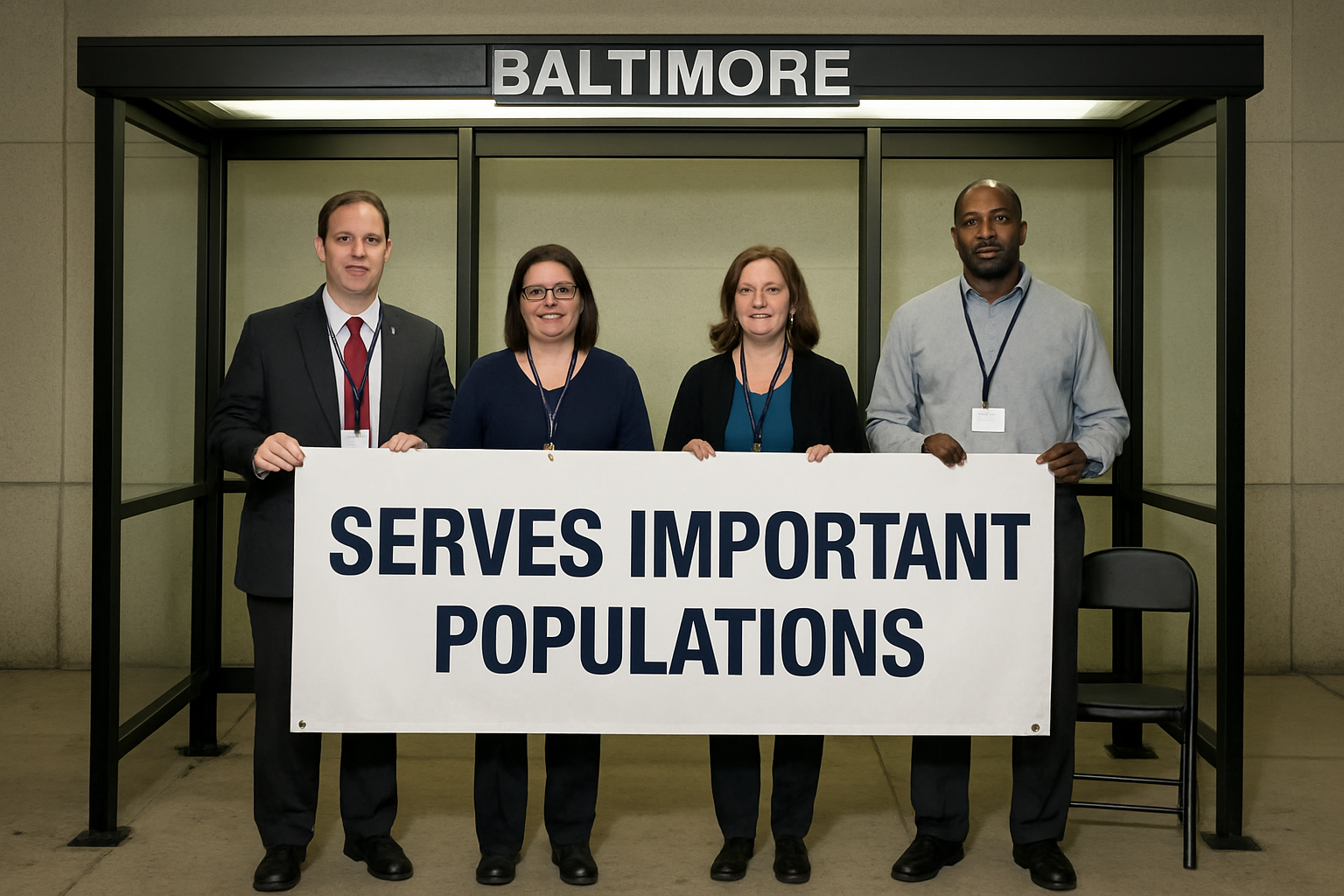
Four university staff in lanyards hold a banner at an empty bus shelter beside one folding chair, under flash photography.

Transportation staff unveil signage at a bus stop with no riders, which the office describes as serving important populations.

Quotation

'Important populations' is a phrase we chose carefully. It describes riders with fewer alternatives. We are not saying those riders are not our students. We are saying they have fewer alternatives.”

Renata Vanterpool-Quist
Transportation coordinator, Johns Hopkins University, interview at the Homewood campus

The Gap

The guide cites unpredictable schedules as its main reason for ranking public transit last. Johns Hopkins, one of Baltimore's largest employers, funds its own shuttles to carry staff between buildings, and a university spokesperson said the ranking reflects where students actually ride. The office did not say how many students ride the city's buses, and it did not say how many of those students have a class at ten. Flexibility is the guide's word for students who can wait. The shuttle that carries Hopkins staff across the city has never been described by the university as unpredictable.

Office Note

The guide was published by the university's Office of Sustainability, which in the same academic year asked students to leave their cars at home. The office's modal shift campaign runs on the same transit network the guide ranks fifth.

More from Baltimore Metro