
Federal Appeals Court Restores Tear Gas for Crowd Control Outside Gray's Landing
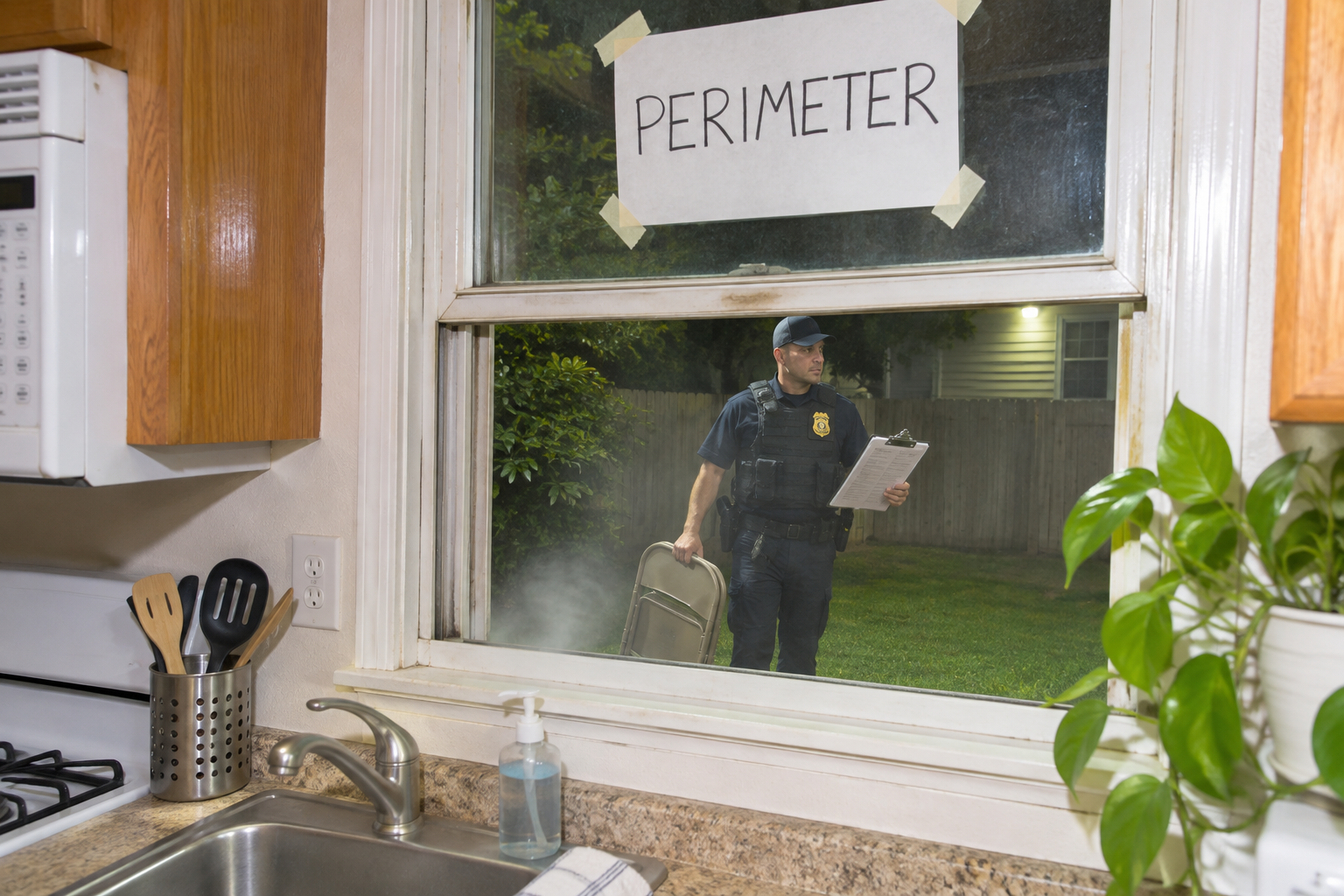
A federal appeals panel on Thursday lifted a temporary ban on tear gas near Portland's ICE building, ruling that the agency may use chemical crowd control on demonstrators who, according to a government filing, have been "interacting with the building." Residents of the Gray's Landing neighborhood said the gas has now reached their kitchens twice this week, and that their kitchen windows are the building's new front desk.
- :
- Portland Area Field Office Staff; Gray's Landing Liaison Working Group
- :
- Regional Operations Coordinator, Perimeter Definition Unit
- :
- April 9, 2026
- :
- Revised Operational Perimeter — Residential Interface Zone (RIZ)
Following the appellate ruling, the Region X perimeter has been redefined to better reflect the operational reality of the building's surroundings. Please review the revised terminology below.
- •Crowd: Any individual present within the dispersal radius at the time of a lawful order.
- •Interacting with the building: Any presence within the dispersal radius that is not demonstrably unrelated to the building. Residents who are unable to demonstrate this may be reclassified.
- •Residential Interface Zone (RIZ): Dwellings whose windows, vents, or doors fall within the dispersal radius. For operational purposes, these are considered part of the building's secure perimeter.
- •Incidental Exposure: Chemical agent entering a residence. Not a deployment event. Not a complaint category.
Residents of the RIZ who file a Perimeter Clarification Petition (Form PCP-1) may request reclassification as non-crowd persons. Petitions are reviewed within 90 to 120 business days. Pending review, residents are classified as crowd participants for purposes of dispersal.
Consider themselves part of the protest environment and adjust their expectations accordingly.”