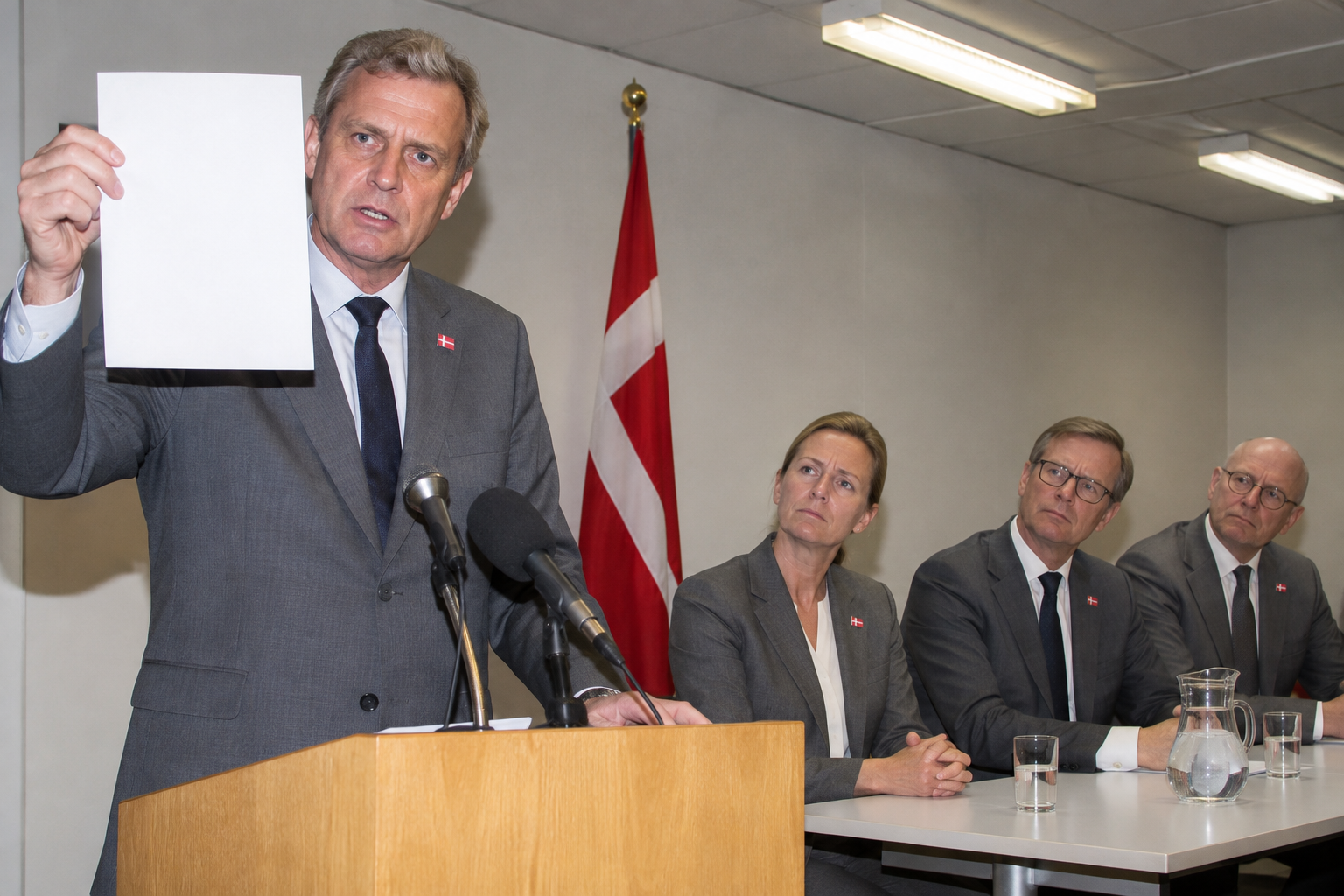
Denmark Announces Burka Ban in Schools to Address Integration, Data Shows No Correlation
Denmark has implemented a comprehensive ban on face-covering garments in all schools and universities, a measure the government framed as essential to integration and social cohesion, despite research suggesting that such bans have minimal measurable effect on integration outcomes and may increase polarization. The policy, announced as part of a broader crackdown on non-integrated migrants, applies to students and staff across the country and carries penalties for violations. Government officials declined to cite specific studies showing the ban would improve integration, instead emphasizing that the move reflected Danish values and public sentiment. The announcement came as Denmark simultaneously rolled out new national health initiatives aimed at measurable health outcomes.
- :
- All Press Office Staff
- :
- Lise Ravn Jorgensen, Deputy Director of Message Discipline
- :
- Tuesday
- :
- Responding to Questions About Supporting Research for the Face-Covering Measure
Colleagues, following Monday's briefing, a number of journalists have asked what research the measure rests on. The following terminology is to be used until further notice.
- •"Danish values" (preferred over "evidence")
- •"The public mood" (preferred over "data")
- •"A matter of principle" (acceptable when pressed twice)
- •"Study", in any form
- •"Correlation" (also "no correlation" and "slight correlation")
- •"Peer-reviewed", which invites follow-up
- •Any figure for how many students are affected
When asked why the ministry's separate national health initiatives cite measurable outcomes while this measure does not, staff are to say that the two policies "address different kinds of problems." Staff are not to say which kind this one addresses.