Poisonal
Pass it along a thing worth keeping

Bio-Digester at Chase Center Reports Record Food Waste Processed, Neighborhood Waste Still Unprocessed

A bio-digester on the Riverfront has diverted up to 500 pounds of food waste per day from landfills, officials confirmed at its public launch. Forty Acres residents have been asked to direct their organic waste toward the digester's new collection program, which is expected to expand to high-volume generators by the end of the year. Residents who already compost in their own backyards were asked to register their compost as a commercial operation.
8 days ago • 8 min read

Digester Launch Draws Praise at Chase Center

WILMINGTON — Delaware officials gathered Tuesday on the Riverfront to celebrate the launch of a bio-digester at Chase Center, which they said can now divert up to 500 pounds of food waste per day from the county landfill. The Delaware Solid Waste Authority called the figure "a milestone for the state," and a representative of Keep Delaware Beautiful described the machine as "the future, parked next to a lot." Asked why the digester has been sitting beside a parking lot since installation, a Chase Center spokesperson said the site was "chosen for visibility, and it is very visible from the highway." The digester can be seen from I-95 and is, according to a staffer on the event's tented stage, "technically the most photographed thing in the lot." Officials declined to say how many pounds have been processed to date, citing the program's early stage.

Residents Asked to Join Collection Program

Under the program's rollout plan, Forty Acres residents are being asked to direct their organic waste toward the digester's new collection route. A Delaware Solid Waste Authority program officer, who spoke on condition that the officer not be named, said the route "is designed to capture the food waste currently going out with the trash on the neighborhood's regular pickup day." The officer said the program is expected to expand to high-volume generators by the end of the year. When asked how a household is supposed to know whether it is a generator of any volume, the officer said, "That's what the registration is for." Residents who compost in their own backyards were also asked to register that compost, a step the officer described as "just paperwork, really."

Forty Acres

compost pile since 1971. grandpa's pile. turns itself basically. nobody asked us. filed the form anyway.

Receipt
RECURRING
Backyard Compost Registration — Forty Acres
Commercial Generator Classification, Form DSWA-17
organic material, est. since 1971$0.00
worm population (reclassified)$38.00
turning frequency (self-directed)$12.50
neighborhood pile, high-volume designation$214.75
inspection readiness fee$90.00
Annual$355.25
grandpa would not have paid this
— resident, Forty Acres
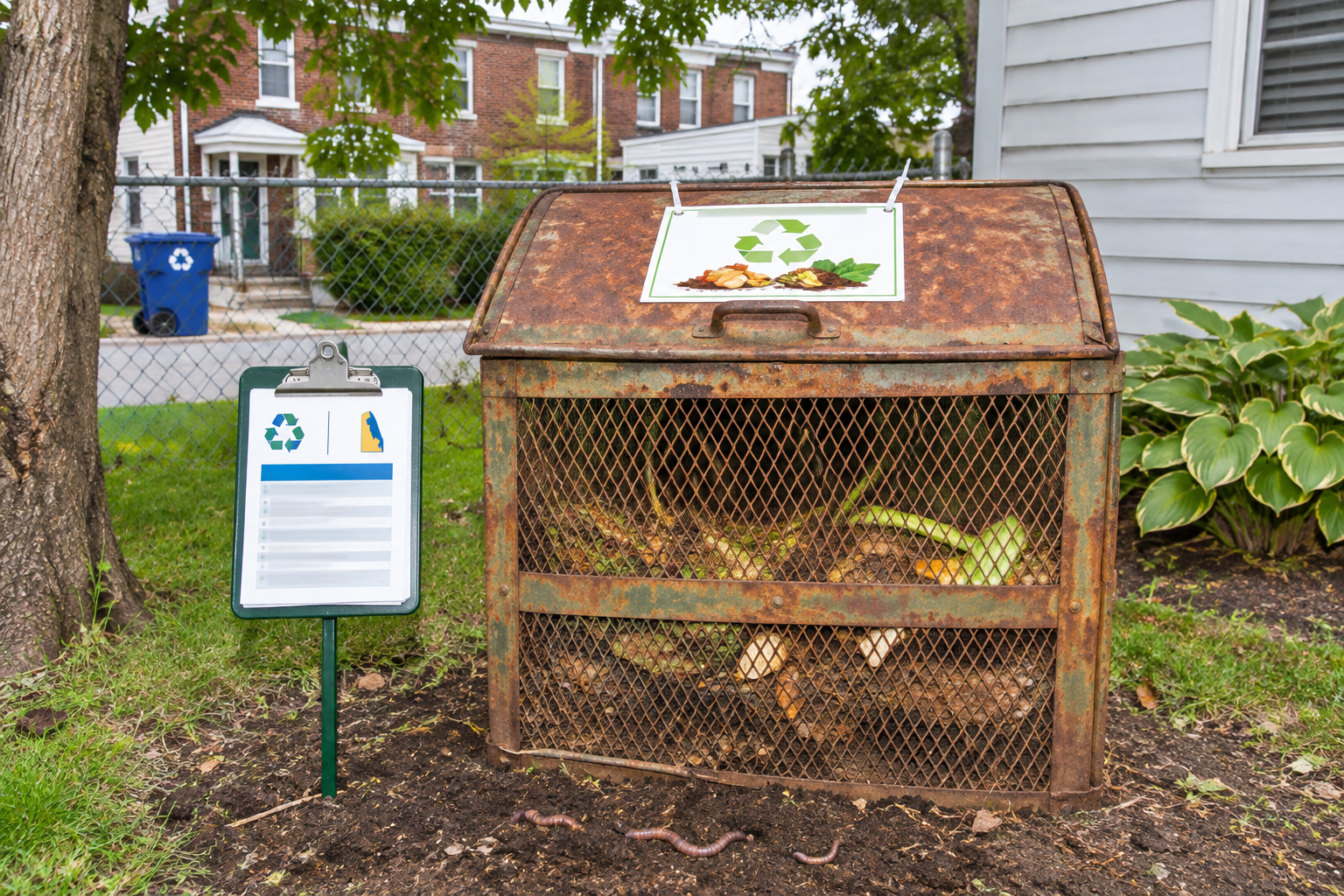
A decades-old backyard compost bin in Wilmington with an official commercial generator placard zip-tied to its lid and a clipboard holder staked into the soil beside it.

The bin has been assigned a placard and a commercial tax identification number.

Program Confirms Registration Requirements

Asked to clarify whether a backyard pile could be reclassified without the resident's consent, the officer said the registration "applies to any organic material leaving a property in a quantity that can be measured." When it was pointed out that nothing leaves a Forty Acres compost pile, the officer said, "Then it's a commercial operation that has not yet started." The officer declined to say what, if anything, the worms have been classified as. A DSWA spokesperson said the agency "is confident the pile will be found compliant." The pile has not been inspected. Its owner has been asked to hold it steady.

The Pile Is Now Subject to Inspection

The digester is still beside the parking lot. The pile has been enrolled, registered, and billed. The worms have been reclassified as staff.

More from Forty Acres