Poisonal
Pass it along a thing worth keeping

Belgian Households Now Officially Spending Money Faster Than They Earn, Celebrated as Achievement

Statbel's 2026 figures reveal that average Belgian households spend €44,000 annually while earning less, a trend the statistics agency flagged as evidence of strong consumer confidence. Officials celebrated the data as proof that household spending remains robust, declining to specify where the money originates or whether the trend is sustainable.

1 month ago • 8 min read

Household Spending Exceeds Income, Statistics Agency Says This Is Good

Statbel, Belgium's federal statistics agency, reported Tuesday that the average Belgian household spent €44,000 in 2026, a figure the agency described as evidence of strong consumer confidence. Average household income in the same period was lower. Statbel did not dispute the gap. It classified the gap as a positive indicator, and said so in the agency's annual key figures release, which runs to nineteen pages and includes a full-color pie chart of spending categories. Asked by this publication where the difference between income and spending was coming from, a Statbel spokesperson for Data Interpretation and Framing, Lieve Vandeputte-Marchal, said the agency "measures what households do, not why," then added that the agency "would not want to speculate on the mechanics of anyone's personal finances." She later confirmed the figures were "extremely confident." The agency's interpretation was endorsed by a deputy minister, who called the data "the most encouraging thing I have read this year."

Household Spending
€44,000
Average annual household spending, Belgium, 2026
risingyear over year
In the same release, Statbel recorded average household income below this figure and listed the gap under "consumer momentum." The agency did not identify which balance sheet absorbs the difference.
Enough to pay roughly eleven months of the average Belgian rent in Brussels, if the household had the money on hand, which the release did not address.
Statbel, Key Figures 2026
ST
Statbel — Internal Communications Desk
Measuring Everything, Explaining Nothing
:
Communications Unit, Data Products Team
:
Lieve Vandeputte-Marchal, Senior Advisor, Data Interpretation & Framing
:
March 4, 2026
:
Framing Guidance: Spending Above Income (Final Version)

Colleagues, following the press cycle on the 2026 key figures, please adopt the approved language below. Do not improvise.

Approved Terminology:
  • •Spending above income: refer to as "consumer momentum."
  • •The gap between income and spending: refer to as "unallocated enthusiasm."
  • •Source of funds: refer to as "outside our remit."
  • •Sustainability: do not use the word. If pressed, state that the agency "monitors trends."

Any reporter asking where the money comes from should be redirected to the methodology appendix. The appendix does not contain a source for the money. This is intended.

Messaging Discipline:
  • •Do not describe household debt as debt. Describe it as "forward-looking credit activity."
  • •Do not describe asset sales as asset sales. Describe them as "liquidity events."
  • •If a retiree is mentioned, say "a segment of mature households exhibiting high engagement."

Reminder: our agency's mission is to make the data legible. Legible is not the same as clear. Please keep this distinction in mind during interviews.
With regards to our shared commitment to not knowing,
Lieve Vandeputte-Marchal, Senior Advisor, Data Interpretation & Framing
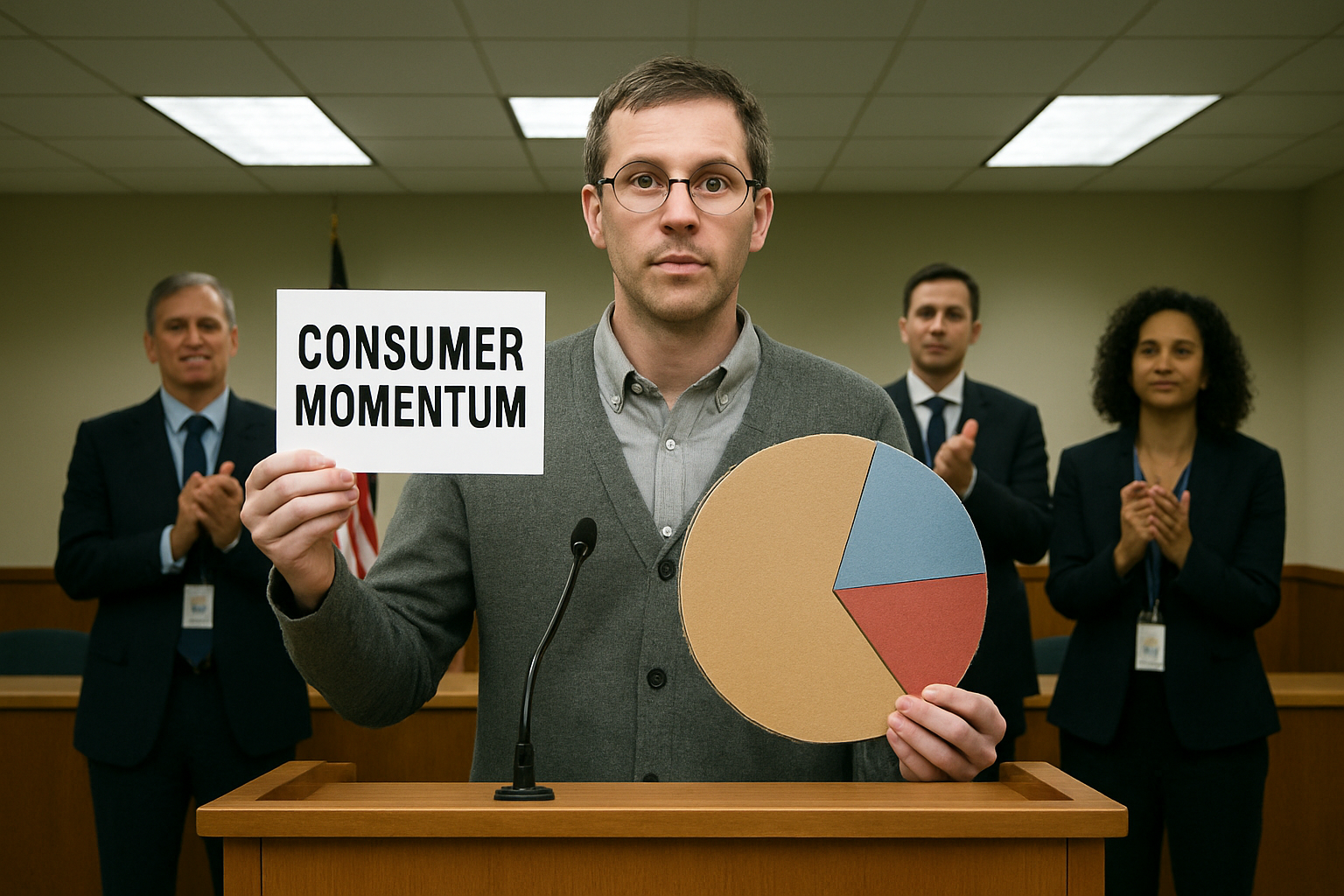
A man in a cardigan holds a laminated card reading consumer momentum beside a pie chart while officials in lanyards applaud under fluorescent lights.

Officials applaud the spending gap at the Statbel key figures briefing, Brussels.

Comparison

How the Gap Is Described Internally

Plain TermStatbel TermApproved Use
Spending above incomeOverspendingConsumer momentumPositive indicator
Household borrowingDebtForward-looking credit activityGrowth signal
Selling family propertyAsset liquidationLiquidity eventEngagement
Negative savingsDrawing down savingsUnallocated enthusiasmConfidence
Frequently Asked

Questions the Agency Has Received About the Gap

Statbel measures household spending and household income. The origin of funds is outside our remit. Please see the methodology appendix, which contains our methodology.
Statbel monitors trends.
Statbel observes elevated forward-looking credit activity among households across income brackets. We would not characterize this as debt.
Statbel has identified a segment of mature households exhibiting high engagement with liquidity events. This segment is performing well.
No. Negative saving is unallocated enthusiasm, and the agency considers enthusiasm a leading indicator. Saving is a lagging indicator. We do not discuss lagging indicators.

The Agency Projects Continuation

Statbel's forecast for the next five years assumes the trend continues. The agency projects that household spending will continue to exceed household income through 2031, a period the release describes as "a sustained expression of confidence." The projection includes no line for repayment. When asked to explain the omission, a Statbel spokesperson said the agency "does not forecast balance sheets" and referred questions to the statistics committee, which declined to comment. The committee's chair did note, in a written statement, that the agency is "deeply committed to making the numbers feel good." Statbel's next key figures release is scheduled for March 2027. The source of funds remains classified.

Kicker

Statbel projects this trend continues for five years. The source of funds remains classified.

More from Belgium